Purchase site: English version US
Loneliness and the Art of Standing Apart
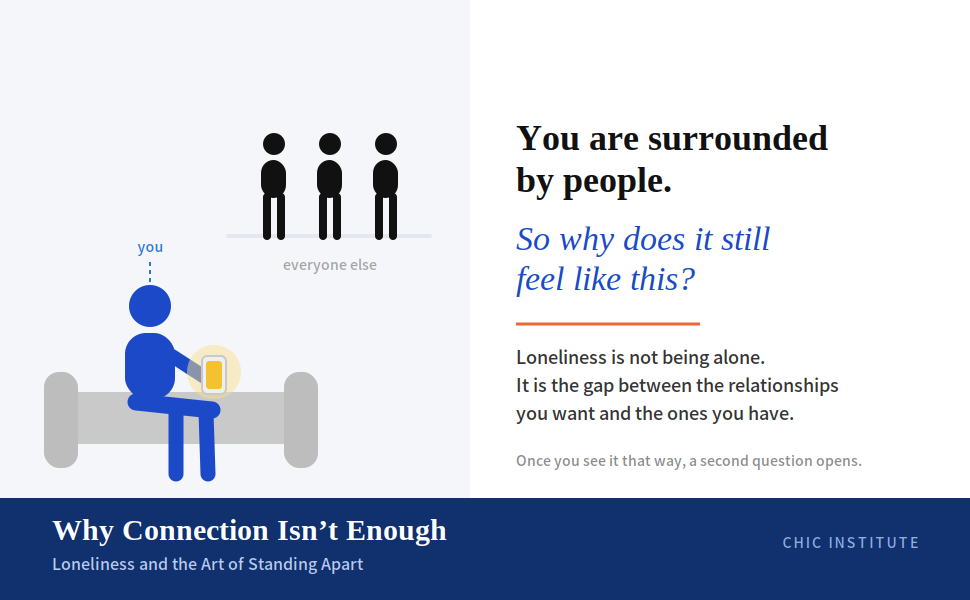
It’s night. You finally open the work you promised yourself you would do today. Thirty minutes in, the screen lights up. The reply takes one line. When you turn back to the page, the thought you were holding is gone.
What we lose is not time. It is the right to decide what our time is for.
This book is about taking that right back. At its center is a single claim: solitude is the condition for focus, and focus is solitude in practice. Solitude does not mean pushing people away. It means not handing the steering wheel of your life to other people’s opinions. Focus does not mean sitting at a desk for hours. It means choosing what to attend to, noticing when you drift, and coming back. These may be two faces of the same thing.
One confession: that claim has not been proven. No study shows that stepping back from other people’s judgment restores your attention, and no such study could be designed. At its core, this book is a kind of thought experiment. Which is exactly why it does not stop at the claim. Every chapter ends with a written exercise, and the book closes with a 90-day program. Once a week you write down five numbers. The point is not my data. It is yours.
Where evidence exists, I used it. What a single notification costs your attention. The residue one task leaves on the next. How quickly lost sleep adds up. I went to the original papers, and I left out the claims that later replications knocked down.
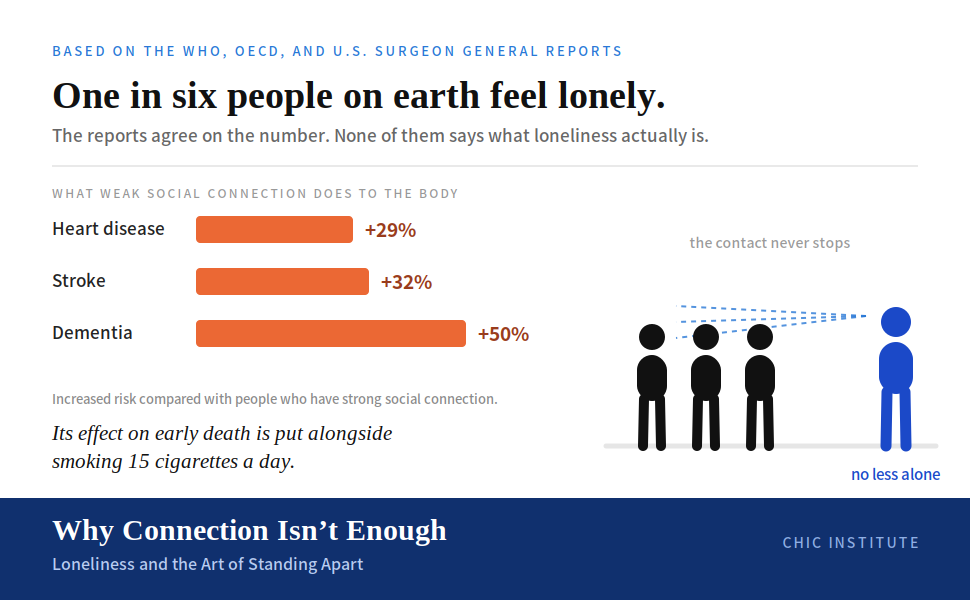
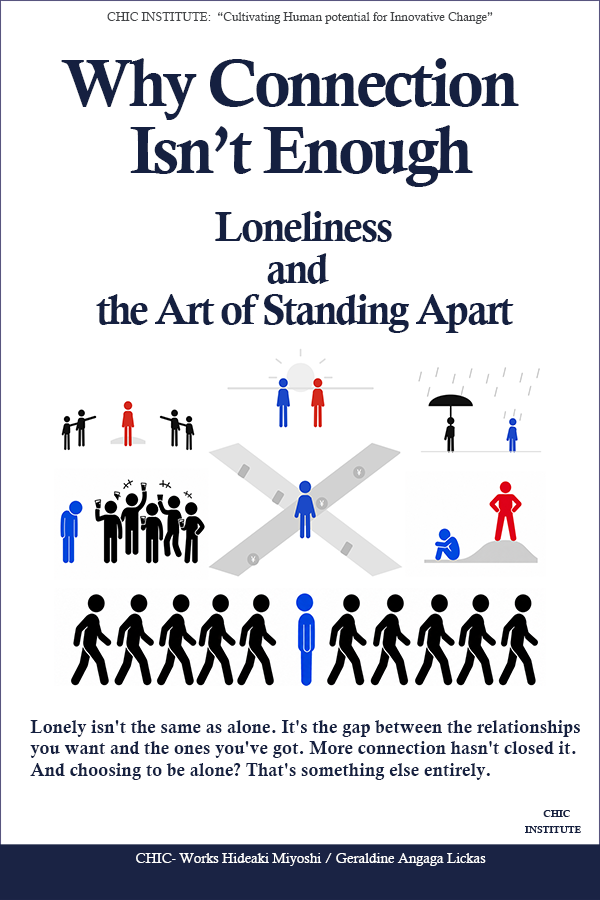
The first book, Why Connection Isn’t Enough, ended without an answer. The subject was not simple enough to hand one over. This book picks up the question that one left behind: so what do I do tomorrow morning?
One more thing. From the outside, practicing solitude and sliding into isolation look exactly alike. You decline invitations. You spend more hours alone. You answer fewer messages. Only the inside is different. So this book hands you a method, and with it a gauge for telling whether the method is working too well.
You are made in the hours when nobody is watching. I would like to give those hours back to you.